About the Store
The brand (name withheld by client request) is a DTC Shopify store selling custom golf course artwork, apparel, and accessories. Shoppers can search for their home course and get it turned into framed art, prints, and gear. Solid product, loyal repeat buyers, but conversion rate on new sessions was lagging what the product deserved.
The Approach
Rather than a full redesign, we ran a sequence of controlled A/B tests: one change per test, split traffic, original page (A) vs. variant page (B), run until the result was statistically reliable.
Five tests. Five measurable wins. Here’s each one.
Test 1 – Hiding the Cart Drawer Upsell
Hypothesis: The upsell carousel in the cart drawer was adding friction at the exact moment a shopper was ready to check out.
What we changed: Removed the “Get 25% off your next product” upsell carousel from the cart drawer, leaving a cleaner path straight to checkout.
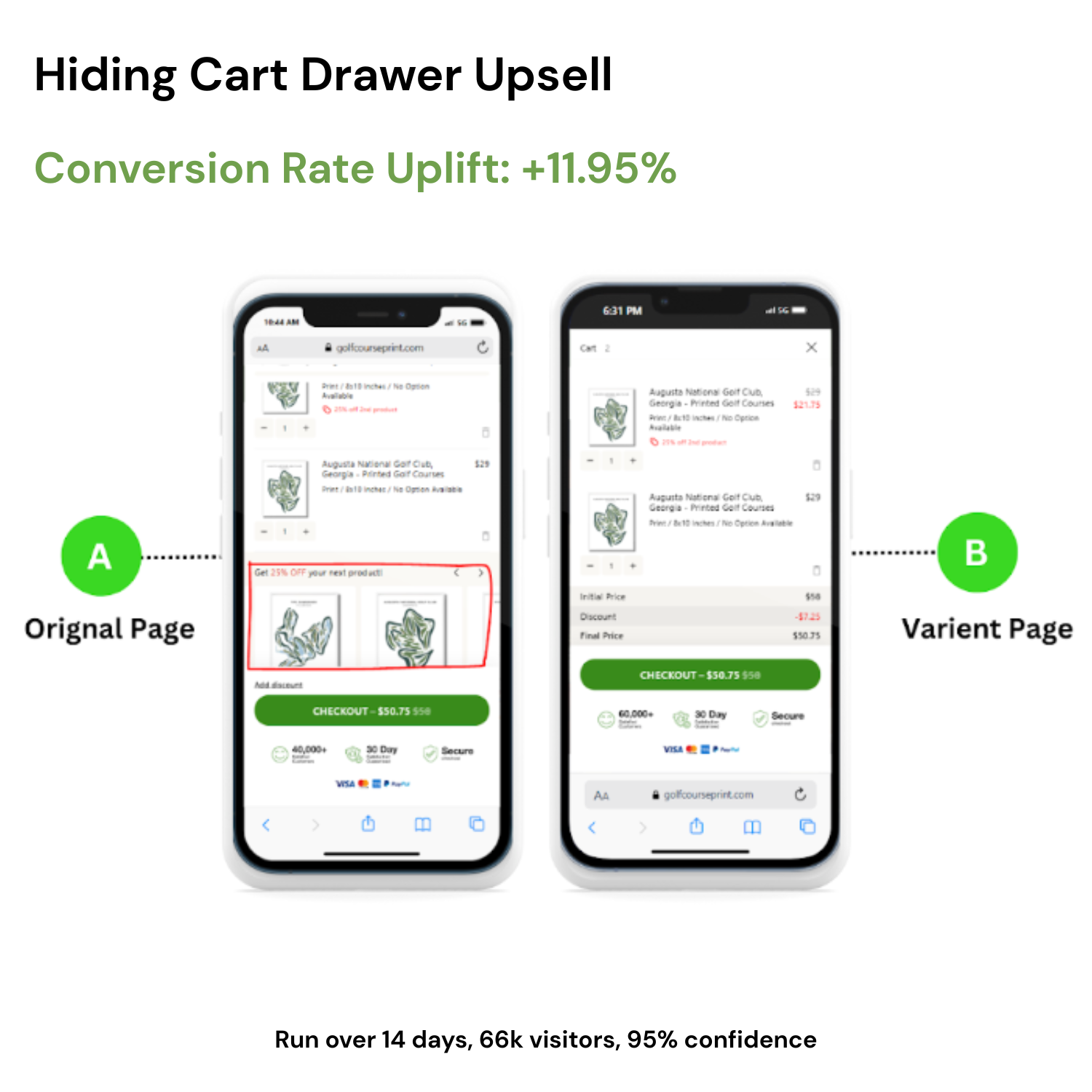
Result: +11.95% conversion rate
Why it worked: Upsells feel helpful to the merchant and like a speed bump to the shopper. At checkout intent, most people don’t want one more decision; they want to pay and be done. Removing the ask removed the hesitation.
Test 2 – Replacing the Hero Video With a Static Image
Hypothesis: The autoplaying video in the homepage hero was slowing page load and distracting from the offer.
What we changed: Swapped the video background for a static hero image with the same messaging.
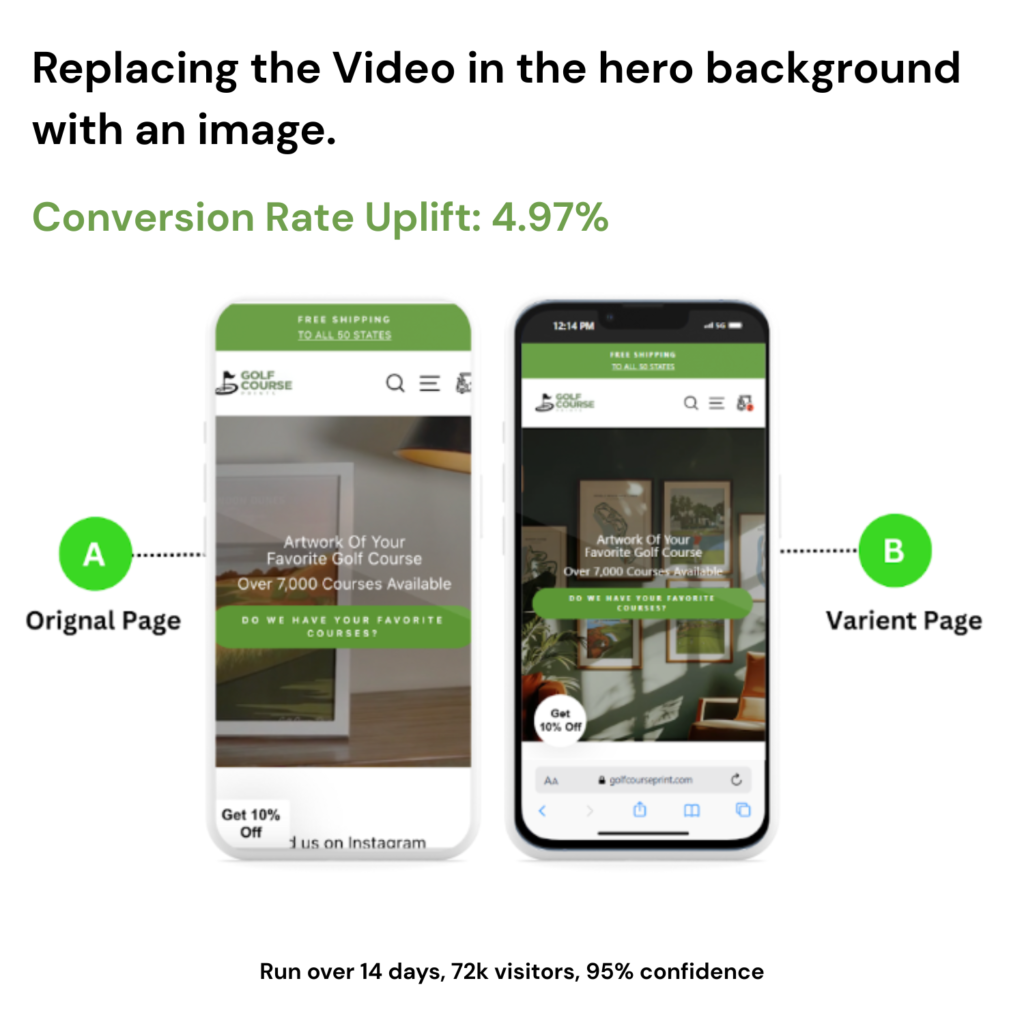
Result: +4.97% conversion rate
Why it worked: Video hero sections look impressive in a design review, but on real connections, especially mobile, they add load time before anything useful renders. A fast, clear static image got shoppers to the message quicker.
Test 3 – Moving Custom Golf Products Into the Homepage’s 4th Slot
Hypothesis: The store’s most personalised, highest-intent product (custom course maps) was buried too far down the homepage to catch browsing visitors.
What we changed: Repositioned the custom golf products section into the 4th slot on the homepage, closer to the fold.
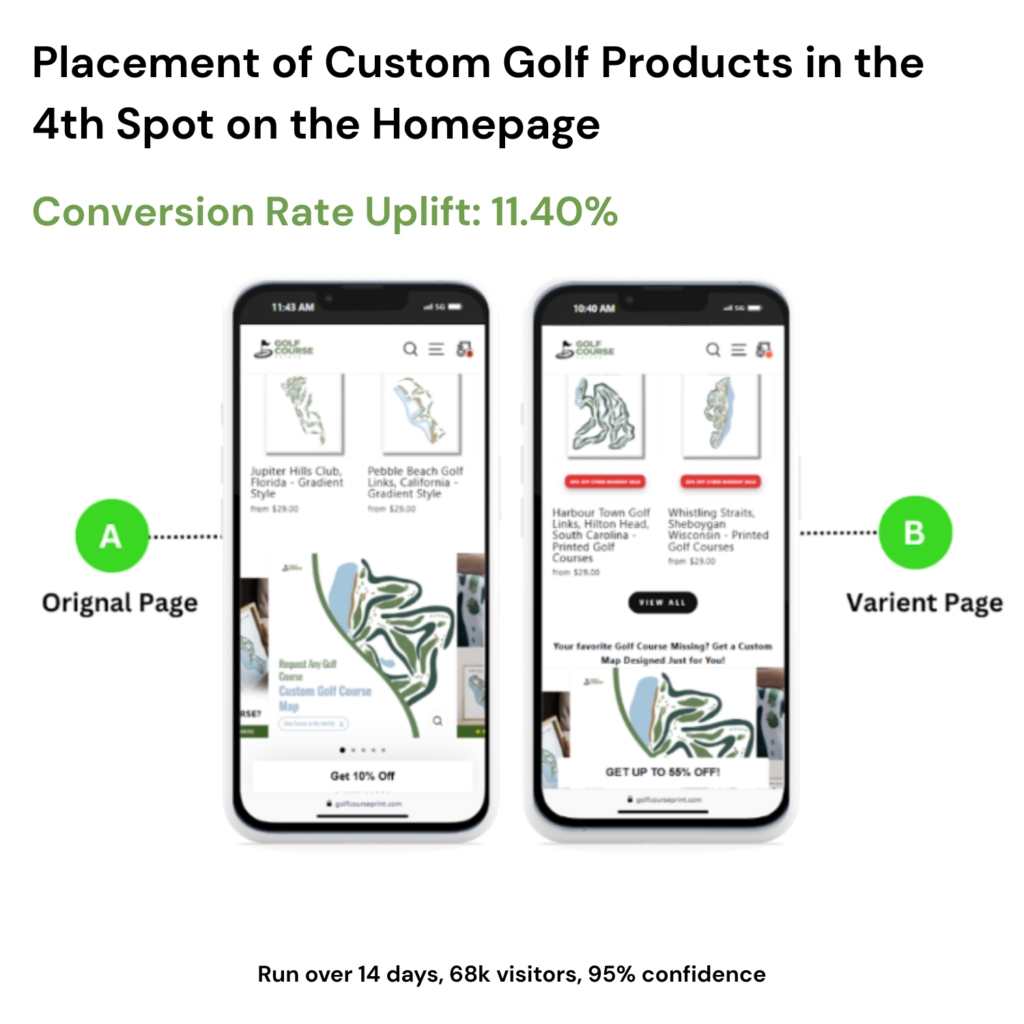
Result: +11.40% conversion rate
Why it worked: This store’s differentiator is personalisation: buyers can get their own course. Burying that story below generic bestsellers meant a lot of visitors never saw the thing that made this brand different. Moving it up let the unique value proposition do its job earlier.
Test 4 – Adding an Instagram Stories Section Below the Hero
Hypothesis: Social proof placed early on the homepage would build trust before asking for a purchase decision.
What we changed: Added a “Find Us on Instagram” strip directly below the hero, replacing a secondary popular-products carousel.
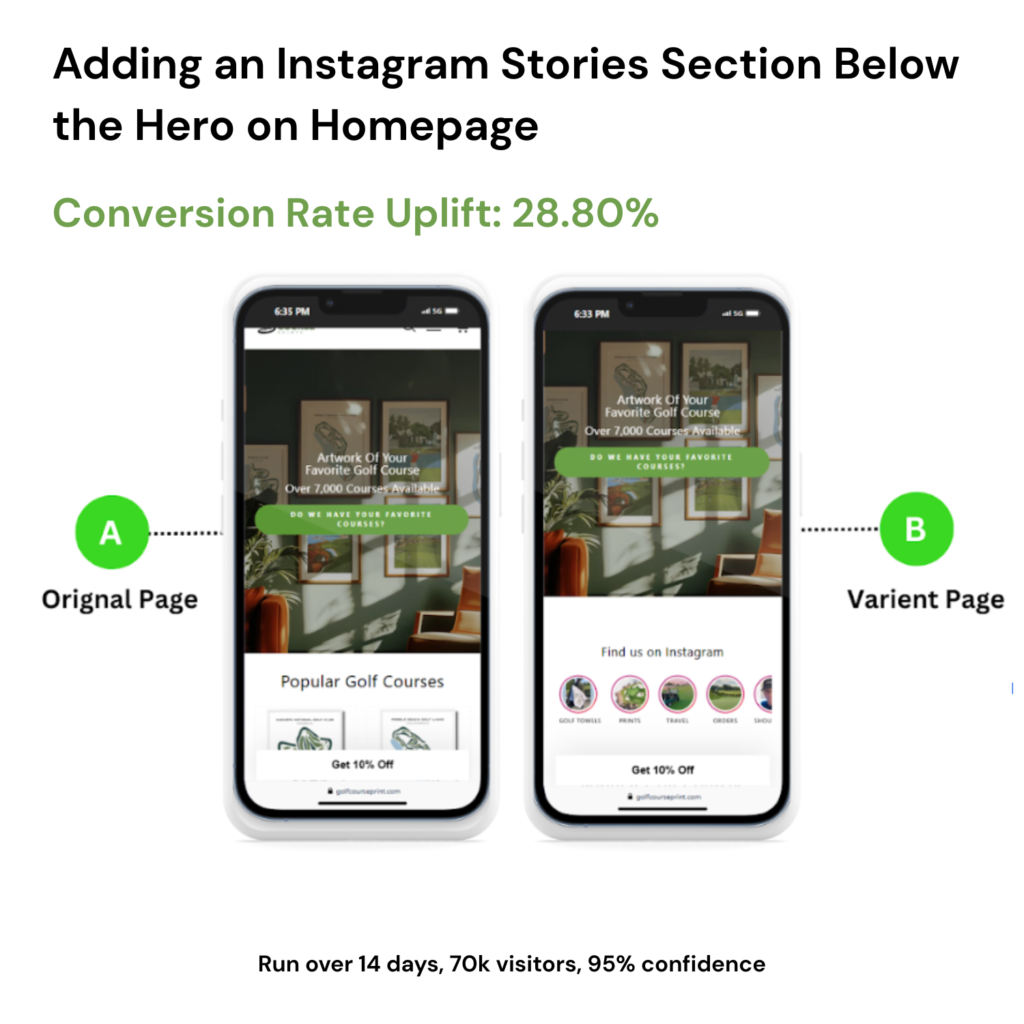
Result: +28.80% conversion rate
Why it worked: This was the single biggest lift of the five, and it makes sense. A lifestyle brand selling artwork benefits enormously from showing real product in real homes, styled the way a buyer might actually use it. Social proof did more early-funnel work here than another product carousel could.
Test 5 – Adding a Shipping Widget Below the Product Page CTA
Hypothesis: Shoppers hesitate at the product page when shipping cost and timeline are unclear.
What we changed: Added a shipping and delivery-date widget directly below the “Add to Cart” button, replacing a vague “Free Shipping in the USA” line.
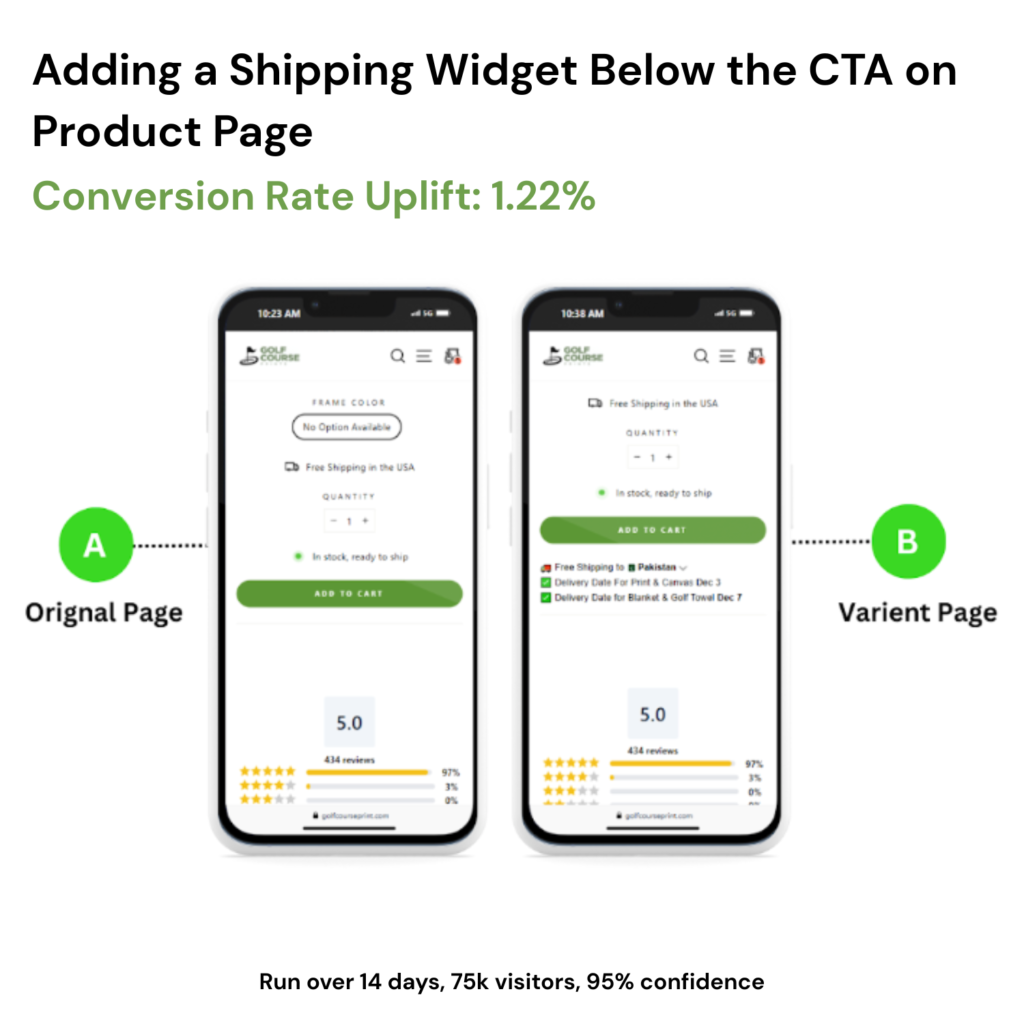
Result: +1.22% conversion rate
Why it worked: Smallest lift of the group, but still a win, and a useful lesson: not every friction point is equally costly. Shipping clarity mattered less here than social proof or upsell placement. It still moved the needle, and it’s a low-effort change most stores can ship the same week.
The Bottom Line
Every one of five independent, isolated changes improved cumulative conversion rate by 57.86%, and two of the wins (hiding the upsell, removing the video) were the opposite of what most “best practice” guides would tell you to do.
That’s really the point of testing instead of guessing. Best practices are a starting hypothesis, not a guarantee. The store’s own visitors are the only ones who get to vote.
Esellence is a profit-first ecommerce growth agency that designs conversion-focused websites, builds seamless customer journeys, and helps brands scale revenue without wasting ad spend.
Frequently Asked Questions regarding A/B Testing
How long should you run an A/B test before trusting the result?
Long enough to reach statistical significance for your traffic volume, typically at least one to two full business cycles. That means the sample includes different days of the week and isn’t skewed by a single traffic spike or slow day.
Does removing an upsell always increase conversion rate?
No. This result is store and placement-specific. Upsells can help average order value when placed earlier in the shopping journey; the issue in this test was specifically the friction added at the final checkout step.
What’s a realistic conversion rate lift to expect from CRO testing?
It varies widely by store, traffic quality, and what’s being tested, which is exactly why testing beats guessing. A placement or copy change that lifts one store’s conversion rate by double digits might do nothing on another.
Do you need a big store to run A/B tests?
You need enough traffic to reach significance in a reasonable time, but that threshold is lower than most people assume. A store doing 10,000+ sessions per month can often run a clean test in four to six weeks. Below that, qualitative methods like session recordings and heatmaps tend to give better signal than split testing.
Where should you start if you want to run tests like these?
Start with a Conversion Audit before you run anything. Auditing tells you where the actual revenue leaks are so you’re testing the right things, not just the obvious ones. The biggest wins in this case study (social proof placement, upsell removal) came from understanding buyer behaviour first.