Once a customer decides to buy from you, the cost of acquiring them is already spent. Every additional dollar they add to their order is almost pure incremental margin — no extra ad spend, no extra fulfilment overhead beyond the marginal cost of additional items.
Average order value is the most underleveraged growth metric in ecommerce. Most Shopify stores focus obsessively on getting more customers while barely touching the revenue potential of the customers they already have.
Understanding the Difference: Upsells vs Cross-Sells
An upsell offers the customer a better version of what they are already buying: an upgrade, a larger size, a premium tier, a bundle that includes the single item plus complementary products at a better per-unit price.
A cross-sell offers a complementary product that pairs with what they are already buying. They are buying a camera — the cross-sell offers a camera bag, a memory card, a cleaning kit.
Different strategies, different placements, different psychology. Understanding the distinction determines where you put each offer.
Where to Place Upsells and Cross-Sells
On the Product Page
Product page cross-sells (“Frequently Bought Together”, “You Might Also Like”) introduce complementary products before the customer commits to checkout. The key is relevance — the suggested products must make obvious sense alongside what the customer is looking at. Generic recommendations perform poorly. Specific, logical pairings perform well.
Product page upsells work best when presented as variants: “This product comes in a 2-pack (save 15%)” or “Add a subscription to save 20% per delivery.” These feel like helpful information, not a sales pitch.
In the Cart
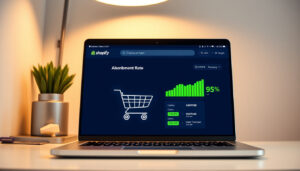
The cart is the highest-intent page in your store — the customer has already made a buy decision and is close to checkout. A well-placed cross-sell here can add meaningful AOV without sacrificing checkout completion rate. Keep cart cross-sells simple: one product, one line of explanation, an easy “Add” button. Anything more complex distracts from checkout and risks the order.
The cart is also the right place for a free shipping threshold reminder: “Add $12 more to unlock free shipping.” This reframes the additional purchase as saving money rather than spending more — one of the most effective AOV tactics available.
Post-Purchase (The Most Underused Placement)
The post-purchase page — the order confirmation screen after checkout is complete — is an exceptionally high-converting upsell placement. The customer is in the best possible emotional state: they have just made a purchase they feel good about. Purchase anxiety is gone.
On Shopify Plus, post-purchase upsells allow one-click additions to the just-placed order without re-entering payment details. This frictionless mechanic dramatically increases take rates. Even on standard Shopify, a compelling offer on the thank-you page with a clear link to a relevant product can generate incremental sales.
Best practice: offer one product, at a meaningful discount (“As a thank you for your order, get X for 20% off”), time-limited to create urgency.
In Post-Purchase Emails
Order confirmation and shipping notification emails have 70–80% open rates — versus 25–35% for marketing emails. They are read because they are expected and trusted. Add a product recommendation or time-limited offer to your shipping confirmation email. Not as the primary content — the shipping information still comes first — but as a natural extension of the order experience.
What Makes an Upsell or Cross-Sell Work
Relevance. The recommended product must make obvious, immediate sense alongside what the customer is buying. If the connection is not immediately apparent, the recommendation reads as noise and the customer ignores it.
Value. The recommendation should feel like a helpful suggestion, not a cash grab. Bundle pricing that gives a real discount, a product that genuinely complements the purchase, a subscription that offers real savings — these feel like good advice. A random product recommendation with no apparent connection feels like spam.
Timing and friction. An upsell that interrupts the purchase flow or requires significant effort to add will reduce checkout completion rate enough to offset AOV gains. Optimise for ease: one click, obvious value, clear next step.
Measuring AOV Impact
Track average order value by traffic source and by whether the customer encountered an upsell or cross-sell. If your AOV from customers who interacted with a product page cross-sell is $15 higher than those who did not, that is a number you can make decisions from.
Also track post-purchase upsell acceptance rate and the AOV contribution of cart cross-sells separately. Knowing which placement is driving AOV lift tells you where to invest further optimisation effort.
Case Study: Removing Cart Drawer Upsells Increased Revenue by $692,213
Upsells and cross-sells are revenue levers — but placement determines whether they help or hurt. For GolfCoursePrint, heatmap data showed users frequently clicking suggested products displayed below cart items. However, those clicks were not converting into additional purchases. Instead, they were causing users to reconsider their original selections, delay checkout, and abandon.
Removing the cart drawer upsell section entirely produced an 11.95% conversion rate uplift and an estimated $692,213 in additional annual revenue.
The lesson: upsells belong on the post-purchase page or within the product page, not in the cart where the primary goal is completing the transaction. Any friction that delays checkout compounds abandonment.
Want to find the highest-leverage AOV opportunities in your store? Get a free Shopify audit and we will identify where upsell and cross-sell strategies would have the most impact.