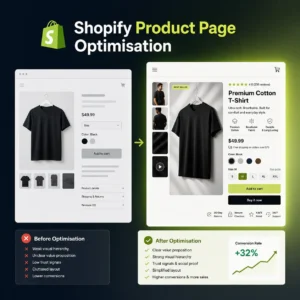
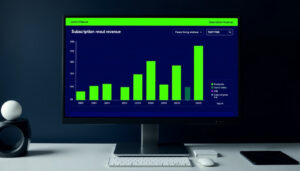
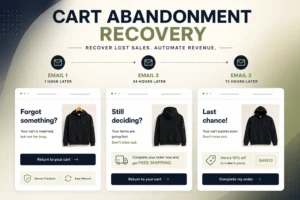
Most Shopify stores treat CRO and email as separate disciplines with different goals. CRO is trying to increase the first purchase. Email is trying to generate the second. Both are optimising in isolation — and leaving the biggest revenue opportunity untouched.
When CRO and email work together, the combined impact on customer lifetime value is significantly greater than the sum of their parts.
Why Customer Lifetime Value Is the Right Metric to Optimise For
Customer Lifetime Value (CLV) is the total revenue a customer generates across all their purchases with your store. It is the metric that determines whether your business is actually profitable at scale.
If your CLV is $120 and your cost to acquire a customer is $90, your payback period is long and your margins are thin. If you increase CLV to $200 through better retention and repeat purchase behaviour, the same $90 acquisition cost starts to look very different — and you can afford to outbid competitors for the same traffic.
CLV is shaped by three variables: how often customers buy, how much they spend each time, and how long they keep buying. CRO and email each influence all three — but they work best when coordinated.
How CRO Feeds Your Email Programme
CRO is not just about getting a visitor to buy once. The data generated by CRO work is some of the most valuable segmentation intelligence your email programme will ever have.
Heatmap data tells you what customers care about. If 80% of visitors scroll directly to your reviews section before doing anything else, that tells you social proof is the primary purchase driver. Your email flows should lead with customer testimonials and results — not product features.
A/B test winners tell you what messaging converts. If a product page headline that leads with outcome (“Sleep deeply within 30 days”) outperforms one that leads with ingredients, your email subject lines and preview text should mirror that winning frame.
Session recordings reveal objections. If you see customers repeatedly hovering over the returns policy before abandoning, that is the objection your abandoned cart email should proactively address in email two.
CRO gives you the intelligence. Email gives you the channel to act on it at scale.
How Email Multiplies Your CRO Investment
Every conversion improvement you make to your store is worth more when you have strong email retention behind it.
CRO increases your first-purchase conversion rate. More first-time buyers enter your customer base. Email retention then converts a higher percentage of those first-time buyers into repeat customers. The revenue impact of every CRO improvement is multiplied by your email retention rate.
If your repeat purchase rate is 20%, and CRO brings in 100 extra first-time buyers, email eventually converts 20 of them into repeat customers. If your retention rate improves to 40%, the same CRO improvement produces 40 repeat customers. The CRO work did not change — but its value doubled because of stronger email.
The Integration Points That Drive CLV
1. Post-Purchase Experience
The handoff between CRO and email happens at the moment of purchase. CRO got the customer to checkout. Email takes over immediately after. Your post-purchase email sequence should be informed by what CRO data tells you about your customer — what they care about, what made them hesitate, what information would have improved their confidence.
2. Segmentation Based on On-Site Behaviour
Modern email platforms like Klaviyo can segment based on on-site behaviour — what pages a customer visited, what products they browsed, how long they spent on specific content.
A customer who spent three minutes on your sustainability page before buying is a different segment than someone who went straight to bestsellers. Your email for the first customer should lead with your environmental commitments. For the second, lead with popularity signals and new arrivals. Same list, different messages, dramatically different conversion rates.
3. Testing Across Both Channels
What you learn from email A/B tests should feed back into CRO, and vice versa. If a subject line framing a benefit in terms of time saved consistently outperforms feature-based framing, test that angle on your product page headlines. Insights are portable. Stop siloing them.
A Practical CLV Improvement Framework
- Audit your current CLV by cohort. Understand what a first-time buyer is actually worth after 90, 180, and 365 days. That is your baseline.
- Map your CRO data to email segments. What do your on-site behaviour patterns tell you about what different customer types care about?
- Align your post-purchase email sequence with the CRO journey. The on-site experience and the email experience should feel like the same brand, the same conversation.
- Share test results across both workstreams. What wins on site wins in email and vice versa.
- Measure CLV at 90-day intervals. If it is improving, your integration is working. If it is flat, something in the handoff is broken.
The Business Case Is Simple
A Shopify store optimising CRO and email independently might see a 20% lift from each. A store running them as an integrated system consistently sees 40–60% improvement in revenue per visitor — because every conversion improvement on site feeds into a retention system that multiplies its value over time.
CLV is the number that determines whether your business can scale. CRO and email, integrated, are how you move it.
Get a free audit to understand where your CLV is leaking and how to fix it.